Queer Places:
6 Cleveland Gardens, London W2 6HA, UK
Eton College, Windsor SL4 6DW, United Kingdom
University of Cambridge, 4 Mill Ln, Cambridge CB2 1RZ
Sligachan Hotel, Sligachan, Isle of Skye, IV47 8SW, United Kingdom.
15 High St, Eton, Windsor SL4 6AX, UK
All Saints Churchyard, 6 Church Ln, Emberton, Olney MK46 5DD, United Kingdom
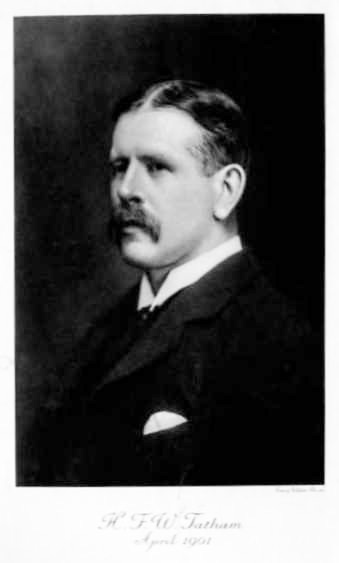 Herbert Francis William Tatham (December 2, 1861 – August 4, 1909) was born on December 2, 1861, at 6 Cleveland Gardens, Paddington, London, the youngest son of Charles
Meaburn Tatham, a barrister, and Elizabeth Collingridge. Reared in a comfortable and well-connected Victorian family, he was educated at Eton College as a King's Scholar
from 1874 to 1881. He continued his academic journey at Trinity College, Cambridge, where he distinguished himself as a scholar. Earning a First Class in both parts of the
Classical Tripos and receiving honorable mention for the Chancellor's Classical Medals, he graduated with a Bachelor of Arts in 1885 and later earned his Master of Arts in
1890.
Herbert Francis William Tatham (December 2, 1861 – August 4, 1909) was born on December 2, 1861, at 6 Cleveland Gardens, Paddington, London, the youngest son of Charles
Meaburn Tatham, a barrister, and Elizabeth Collingridge. Reared in a comfortable and well-connected Victorian family, he was educated at Eton College as a King's Scholar
from 1874 to 1881. He continued his academic journey at Trinity College, Cambridge, where he distinguished himself as a scholar. Earning a First Class in both parts of the
Classical Tripos and receiving honorable mention for the Chancellor's Classical Medals, he graduated with a Bachelor of Arts in 1885 and later earned his Master of Arts in
1890.
Returning to his alma mater in 1886, Tatham spent the remainder of his professional life as an esteemed assistant master and classical housemaster at Eton College,
managing a house of forty boys. Alongside his teaching career, he contributed to academia as an author of school textbooks, co-authoring the 1892 historical work Men of
Might with his close friend and fellow Eton master Arthur Christopher Benson. Tatham was also a talented writer of short fiction,
posthumously published in the 1910 collection Footprints in the Snow and Other Tales.
In April 1891, Herbert Francis William Tatham was recorded residing at the Sligachan Hotel on the Isle of Skye in Scotland. He was staying there alongside two of his
colleagues and fellow assistant masters at Eton College: Arthur Christopher Benson and Thomas Cunningham Porter. The
Sligachan Hotel, located in a remote and dramatic setting near the Cuillin mountains on Skye, was a popular destination for travelers, climbers, and intellectuals seeking
rugged outdoor landscapes. For Tatham and his companions, such highland excursions reflected the active, outdoorsman culture and close-knit camaraderie shared among
late-Victorian public schoolmasters. This particular journey brought Tatham together with Arthur Christopher Benson, who would remain one of his closest lifelong friends.
Beyond his formal academic and professional pursuits, Tatham was a member of the prestigious Cambridge Apostles, the
elite, intellectually rigorous secret society deeply tied to the intellectual and queer cultural history of Cambridge. His membership in the Apostles, alongside his intimate
lifelong friendships with figures like Arthur Christopher Benson—who wrote a deeply affectionate memoir of Tatham following his death—places him within influential networks
of homosocial and homoerotic camaraderie common among late-Victorian intellectual circles.
Tatham’s life was cut short on August 4, 1909, at the age of 47, following a tragic accident during a holiday in Chamonix, France. While returning from a climb near the
Montanvert Hotel with his nephew Meaburn Tatham, he slipped on an easy path and suffered fatal head injuries. His body was returned to England, and he was buried on
August 9, 1909, in the churchyard at All Saints, Emberton, leaving behind a legacy commemorated by an oak table in the Eton College Library and a memorial window in
Emberton.
References:
Other references:
- Baptism Register: Holy Trinity, Paddington (record of baptism on January 25, 1862).
- 1871 England Census (residence at 14 Cleveland Gardens, Paddington).
- 1881 England Census (residence at Eton College).
- 1891 England Census (residence at Sligachan Hotel, Skye, with fellow Eton masters Arthur Christopher Benson and Thomas Cunningham Porter).
- 1901 England Census (residence at 15 High Street, Eton).
- University Records: Cambridge University Alumni (admissions, scholarship, and degree records for Trinity College, listing his BA in 1885 and MA in 1890).
- Probate and Estate Records: National Probate Calendar (administration of his estate, granted on October 12, 1909, to Charles Meaburn Tatham, valuing his effects at £63,487 12s. 6d.).
- Correspondence: Papers of Sir Henry Babington Smith (specifically item SMIH/4/84, containing a letter of acceptance written by Tatham on May 20, 1905, for the annual Apostles' dinner).
- The Morning Post: University Intelligence report from February 23, 1885, recording the award of the Chancellor's classical medals and noting Tatham's honorable mention.
- The Times: News reports following his fatal alpine accident published on or around August 9, 1909.
- Family notices, including diamond wedding announcements and historical family marriage notices (such as the 1913 retrospective on his parents' marriage).
- A. C. Benson: Biographical memoir published in Footprints in the Snow and Other Tales (1910), detailing Tatham's life, character, and death.
- Charles Meaburn Tatham: Recollections (unpublished family memoirs and manuscript notes detailing the Tatham and Collingridge family history, ancestry, and the circumstances surrounding Herbert Tatham's death).
- Isdb (Internet Speculative Fiction Database): Author record for H. F. W. Tatham (listing his posthumous 1910 fiction collection and short stories).
Support this project
This website is a passion project researched, developed, and funded entirely by me. If you find the content valuable and would like to help support the ongoing research and hosting costs, any contribution is deeply appreciated.
Thank you for keeping this independent resource alive!
My books on Amazon: Elisa Rolle's books
BACK TO HOME PAGE
